
1. Master the Tones First — The Backbone of Yoruba
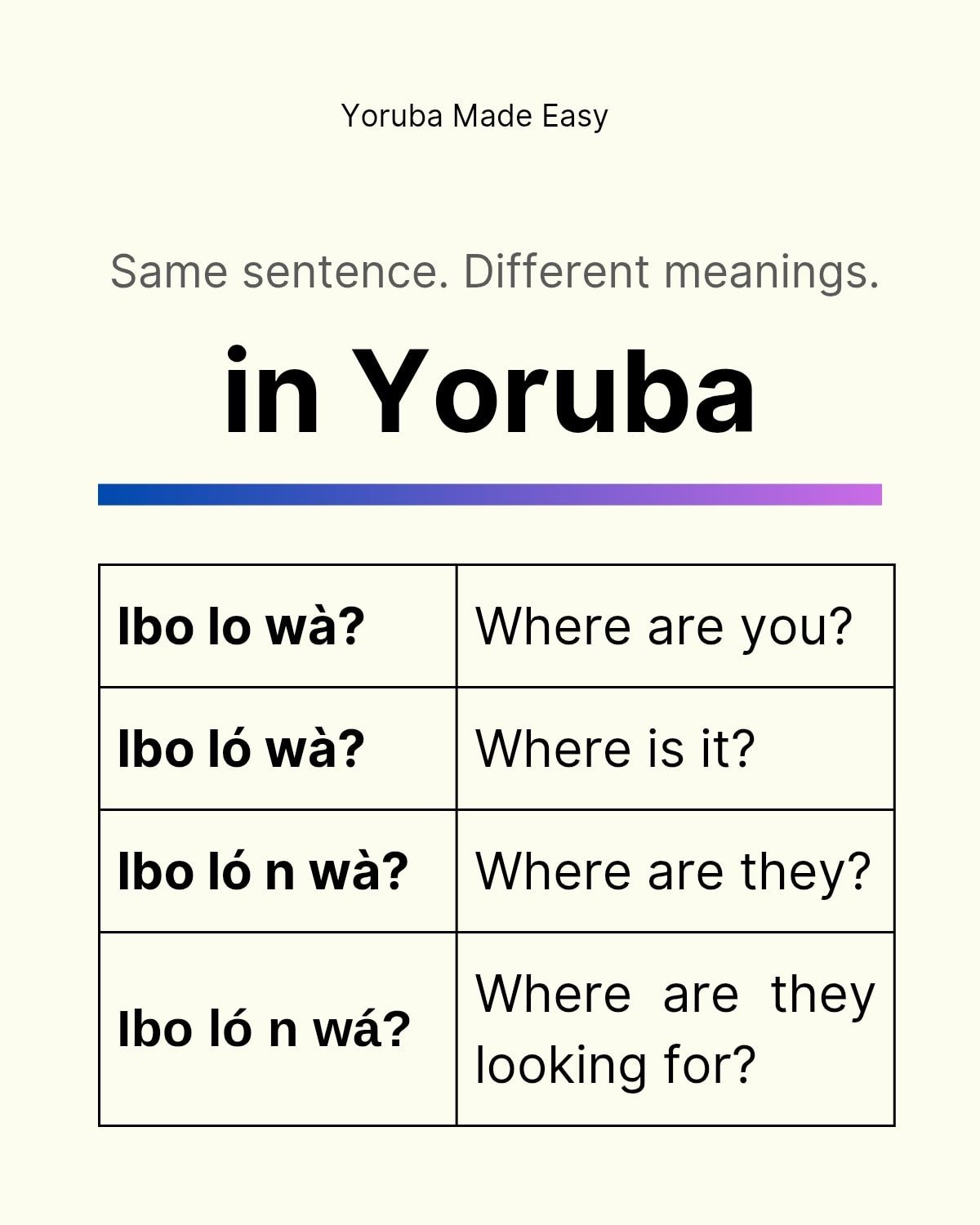
Yoruba is a tonal language, meaning the pitch of your voice changes the meaning of words. This is not optional—it’s foundational.
For example:
owo can mean money, broom, or even something else depending on tone
Same spelling. Different meanings. Completely different conversations.
👉 How to train this skill:
Listen to native speakers daily (music, movies, conversations)
Repeat phrases out loud, copying not just words but melody
Use slow playback tools to hear tone differences clearly
Think of tones like the steering wheel of a car. Without it, you’re moving—but not in the right direction.
2. Focus on Phrases Instead of Isolated Words
A common mistake learners make is memorizing long word lists. That’s like collecting puzzle pieces without knowing the picture.
Instead, learn functional phrases you can use immediately:
“Bawo ni?” — How are you?
“Mo wa dada” — I’m fine
“E jowo” — Please
“E se pupo” — Thank you very much
👉 Why this works:
You start communicating from day one
You naturally learn grammar and structure
Your confidence builds faster
Language is meant to be used, not just stored.
3. Create an Immersive Environment Around You
You don’t need to travel to fully immerse yourself—you can bring Yoruba into your daily life.
👉 Simple ways to do this:
Watch Yoruba films from Nollywood 🎬
Listen to Yoruba songs while doing everyday tasks
Follow Yoruba content creators on social media
Label objects around your room in Yoruba
Over time, your brain stops treating Yoruba as “foreign” and starts recognizing it as familiar.
It’s like planting seeds—constant exposure waters them.
4. Speak Early, Speak Often, Speak Imperfectly
One of the fastest ways to learn is also the one most people avoid: speaking before you feel ready.
Here’s the truth: you will sound awkward at first. That’s not failure—that’s progress in disguise.
👉 How to practice speaking:
Talk to friends or family who understand Yoruba
Join online language communities
Practice speaking out loud, even alone
Record yourself and compare with native speakers
Every sentence you attempt strengthens your fluency muscles. Silence, on the other hand, keeps them weak.
5. Use Smart Study Techniques (Consistency Beats Intensity)
You don’t need to study for hours—you need to study smartly and consistently.
👉 Effective strategies:
Use spaced repetition apps like Anki or Quizlet
Study in short daily sessions (15–30 minutes)
Review old material frequently instead of cramming new content
Mix listening, speaking, reading, and writing
Learning Yoruba is like going to the gym. One intense workout won’t change much—but consistent training will transform you.
Bonus Tip: Learn the Culture Alongside the Language
Yoruba is deeply tied to culture, tradition, and respect.
For example:
Greetings change based on age and situation
Respectful speech is very important
Some expressions carry cultural meaning beyond literal translation
Understanding this makes your Yoruba feel natural, not robotic.
Final Thoughts: Become a Language Explorer
The fastest learners aren’t the smartest—they’re the most curious.
Treat Yoruba like a world you’re exploring:
Listen like a musician 🎧
Speak like a child learning their first words
Practice like someone who isn’t afraid to fail
If you stay consistent, one day you’ll realize something surprising…
You’re no longer translating in your head.
You’re just understanding.
1. Master the Tones First — The Backbone of Yoruba
Yoruba is a tonal language, meaning the pitch of your voice changes the meaning of words. This is not optional—it’s foundational.
For example:
owo can mean money, broom, or even something else depending on tone
Same spelling. Different meanings. Completely different conversations.
👉 How to train this skill:
Listen to native speakers daily (music, movies, conversations)
Repeat phrases out loud, copying not just words but melody
Use slow playback tools to hear tone differences clearly
Think of tones like the steering wheel of a car. Without it, you’re moving—but not in the right direction.
2. Focus on Phrases Instead of Isolated Words
A common mistake learners make is memorizing long word lists. That’s like collecting puzzle pieces without knowing the picture.
Instead, learn functional phrases you can use immediately:
“Bawo ni?” — How are you?
“Mo wa dada” — I’m fine
“E jowo” — Please
“E se pupo” — Thank you very much
👉 Why this works:
You start communicating from day one
You naturally learn grammar and structure
Your confidence builds faster
Language is meant to be used, not just stored.
3. Create an Immersive Environment Around You
You don’t need to travel to fully immerse yourself—you can bring Yoruba into your daily life.
👉 Simple ways to do this:
Watch Yoruba films from Nollywood 🎬
Listen to Yoruba songs while doing everyday tasks
Follow Yoruba content creators on social media
Label objects around your room in Yoruba
Over time, your brain stops treating Yoruba as “foreign” and starts recognizing it as familiar.
It’s like planting seeds—constant exposure waters them.
4. Speak Early, Speak Often, Speak Imperfectly
One of the fastest ways to learn is also the one most people avoid: speaking before you feel ready.
Here’s the truth: you will sound awkward at first. That’s not failure—that’s progress in disguise.
👉 How to practice speaking:
Talk to friends or family who understand Yoruba
Join online language communities
Practice speaking out loud, even alone
Record yourself and compare with native speakers
Every sentence you attempt strengthens your fluency muscles. Silence, on the other hand, keeps them weak.
5. Use Smart Study Techniques (Consistency Beats Intensity)
You don’t need to study for hours—you need to study smartly and consistently.
👉 Effective strategies:
Use spaced repetition apps like Anki or Quizlet
Study in short daily sessions (15–30 minutes)
Review old material frequently instead of cramming new content
Mix listening, speaking, reading, and writing
Learning Yoruba is like going to the gym. One intense workout won’t change much—but consistent training will transform you.
Bonus Tip: Learn the Culture Alongside the Language
Yoruba is deeply tied to culture, tradition, and respect.
For example:
Greetings change based on age and situation
Respectful speech is very important
Some expressions carry cultural meaning beyond literal translation
Understanding this makes your Yoruba feel natural, not robotic.
Final Thoughts: Become a Language Explorer
The fastest learners aren’t the smartest—they’re the most curious.
Treat Yoruba like a world you’re exploring:
Listen like a musician 🎧
Speak like a child learning their first words
Practice like someone who isn’t afraid to fail
If you stay consistent, one day you’ll realize something surprising…
You’re no longer translating in your head.
You’re just understanding.
1. Master the Tones First — The Backbone of Yoruba
Yoruba is a tonal language, meaning the pitch of your voice changes the meaning of words. This is not optional—it’s foundational.
For example:
owo can mean money, broom, or even something else depending on tone
Same spelling. Different meanings. Completely different conversations.
👉 How to train this skill:
Listen to native speakers daily (music, movies, conversations)
Repeat phrases out loud, copying not just words but melody
Use slow playback tools to hear tone differences clearly
Think of tones like the steering wheel of a car. Without it, you’re moving—but not in the right direction.
2. Focus on Phrases Instead of Isolated Words
A common mistake learners make is memorizing long word lists. That’s like collecting puzzle pieces without knowing the picture.
Instead, learn functional phrases you can use immediately:
“Bawo ni?” — How are you?
“Mo wa dada” — I’m fine
“E jowo” — Please
“E se pupo” — Thank you very much
👉 Why this works:
You start communicating from day one
You naturally learn grammar and structure
Your confidence builds faster
Language is meant to be used, not just stored.
3. Create an Immersive Environment Around You
You don’t need to travel to fully immerse yourself—you can bring Yoruba into your daily life.
👉 Simple ways to do this:
Watch Yoruba films from Nollywood 🎬
Listen to Yoruba songs while doing everyday tasks
Follow Yoruba content creators on social media
Label objects around your room in Yoruba
Over time, your brain stops treating Yoruba as “foreign” and starts recognizing it as familiar.
It’s like planting seeds—constant exposure waters them.
4. Speak Early, Speak Often, Speak Imperfectly
One of the fastest ways to learn is also the one most people avoid: speaking before you feel ready.
Here’s the truth: you will sound awkward at first. That’s not failure—that’s progress in disguise.
👉 How to practice speaking:
Talk to friends or family who understand Yoruba
Join online language communities
Practice speaking out loud, even alone
Record yourself and compare with native speakers
Every sentence you attempt strengthens your fluency muscles. Silence, on the other hand, keeps them weak.
5. Use Smart Study Techniques (Consistency Beats Intensity)
You don’t need to study for hours—you need to study smartly and consistently.
👉 Effective strategies:
Use spaced repetition apps like Anki or Quizlet
Study in short daily sessions (15–30 minutes)
Review old material frequently instead of cramming new content
Mix listening, speaking, reading, and writing
Learning Yoruba is like going to the gym. One intense workout won’t change much—but consistent training will transform you.
Bonus Tip: Learn the Culture Alongside the Language
Yoruba is deeply tied to culture, tradition, and respect.
For example:
Greetings change based on age and situation
Respectful speech is very important
Some expressions carry cultural meaning beyond literal translation
Understanding this makes your Yoruba feel natural, not robotic.
Final Thoughts: Become a Language Explorer
The fastest learners aren’t the smartest—they’re the most curious.
Treat Yoruba like a world you’re exploring:
Listen like a musician 🎧
Speak like a child learning their first words
Practice like someone who isn’t afraid to fail
If you stay consistent, one day you’ll realize something surprising…
You’re no longer translating in your head.
You’re just understanding.
Learning Yoruba is not just about stacking vocabulary like bricks. It’s more like learning to dance inside a language there’s rhythm, tone,
culture, and expression all woven together. If you approach it the right way, progress doesn’t feel like climbing a hill… it feels like catching a wave 🌊
Here are five deeply practical tips to help you learn Yoruba faster and more effectively:
5 Powerful Tips to Learn Yoruba Faster